
In the Namib Desert, where the sun usually treats anything with a pulse like a piece of overcooked jerky, lives the Stenocara beetle. This little genius has a back covered in a microscopic landscape of peaks and valleys. When the morning fog rolls in, the beetle stands on its head, catches water on the “hydrophilic” (water-loving) bumps on its shell, and lets the droplets roll down “hydrophobic” (water-fearing) troughs straight into its mouth.
It is, quite literally, a walking, breathing piece of plumbing.
For most of human history, football players were significantly less intelligent than this beetle. For decades, the world’s greatest athletes sprinted across pitches wearing 100% heavy-duty cotton. By the 70th minute, these jerseys represented a three-gallon commitment to misery. A soaked cotton shirt can double in weight, sagging toward the turf like a wet rug and chafing the skin with the gentle grace of a belt sander.
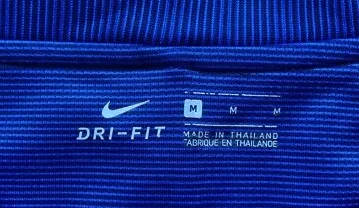
Then came the 1990s, and with them, the “Dri-FIT” revolution. Nike looked at the beetle (metaphorically) and realized that if you can’t stop a human from sweating, you should at least make the sweat someone else’s problem—specifically, the atmosphere’s.
Dri-FIT, along with its various rivals like Adidas’ AEROREADY (and the brand-new 2026 CLIMACOOL+ kits), Puma’s dryCELL, and the generic DryFast labels found on budget gear, all rely on a process called capillary action. Instead of round cotton fibers that soak up liquid, these jerseys use specially shaped polyester microfibers. These fibers act like tiny straws, pulling moisture away from your skin and pushing it to the outer surface of the fabric. Once the sweat reaches the surface, it spreads out over a larger area, allowing the air to whisk it away before you even realize you’ve turned into a human fountain.
While Nike’s marketing department won the naming war—”Dri-FIT” has basically become the “Kleenex” of sports fabric—every brand has their own flavor of the same magic trick.
However, fabric softener is the ultimate enemy of the moisture-wicking jersey. Softener works by coating fibers in a thin, waxy film to make them feel “fluffy.” On a jersey, that wax clogs the microscopic “straws” that move the sweat.
If you use softener on your Dri-FIT, you are effectively turning your authentic match-day kit back into a very expensive, very shiny version of that 1970s cotton rug.