
In the winter of 1983, a man named Moulay Abdallah ben Ali Alaoui passed away at the age of forty-eight. He was the brother of King Hassan II and the uncle of the current Moroccan monarch, Mohammed VI. While history remembers him as a prince and a patron of the arts, his name now stands etched in concrete and steel as the Prince Moulay Abdallah Stadium in Rabat. This very ground became a pressure cooker of African destiny this past Sunday. It is a strange thing how the names of the departed are called upon to host the shouting matches of the living, but in Africa, the past is never truly dead; it isn’t even past. As the sun dipped behind the Atlantic horizon, the stadium held a continent’s worth of suspicion, hope, and the peculiar scent of North African mint tea mixed with West African Jollof-fueled anxiety.
If Chinua Achebe were alive to witness the build-up to this final, he might have chuckled and noted that “When suffering knocks at your door, and you say there is no seat for him, he tells you not to worry because he has brought his own stool.” Suffering, in this case, brought its own stool; it sat down in the Senegal team hotel and refused to leave. The days leading up to the match were less about football. The Senegalese delegation, usually as cool as the breeze off the Cap-Vert peninsula, was practically foaming at the mouth. They claimed their security was nonexistent, their training facilities were a mirage, and their ticket allocation was a joke—2,850 tickets in a sea of nearly 70,000 Moroccans. It felt like the hosts were trying to win the match before a ball was even kicked, tightening the screws in the shadows. But as the Igbo proverb says, “The sun will shine on those who stand before it shines on those who kneel under them.” Senegal refused to kneel.
People keep asking why Morocco 🇲🇦 is hosting all these football tournaments. It’s simple, most governments don’t want to spend the required MONEY.
CAF president Patrice Motsepe explains how some competitions don’t get a host and Morocco have to step in #AFCON2025 pic.twitter.com/QjYLZnExa1
— Eric Njiru- #AFCON2025⚽️ (@EricNjiiru) January 18, 2026
The tension was thick enough to cut with a rusty machete, exacerbated by the whispers that had followed Morocco throughout the tournament. The Atlas Lions had sailed into the final on a boat that many claimed was propelled by the “Hand of God.” First, it was the questionable ‘denied’ penalty decision against Tanzania in the knockout stages. Then came the dismantling of Cameroon, where the Indomitable Lions looked strangely tamed by the officiating. And finally, the semi-final against Nigeria, a match so fraught with controversy that the Super Eagles looked ready to file a case at The Hague. The narrative was set: Morocco was destined to win, by hook or by crook. But as Achebe wrote, “There is such a thing as absolute power over narrative,” and on Sunday night, the narrative decided it was time for a plot twist.
The match itself began as a cagey affair, a chess match played on grass. Morocco, buoyed by a wall of red noise, tried to suffocate Senegal with possession. Achraf Hakimi and Brahim Diaz danced around the pitch, looking for cracks in the Teranga Lions’ armor. But Senegal, led by the spiritual presence of Sadio Mané, stood firm. They absorbed the pressure like a sponge, waiting for the moment to wring it out. The first ninety minutes were a blur of tactical fouls and near misses, a stalemate that felt less like a sporting contest.
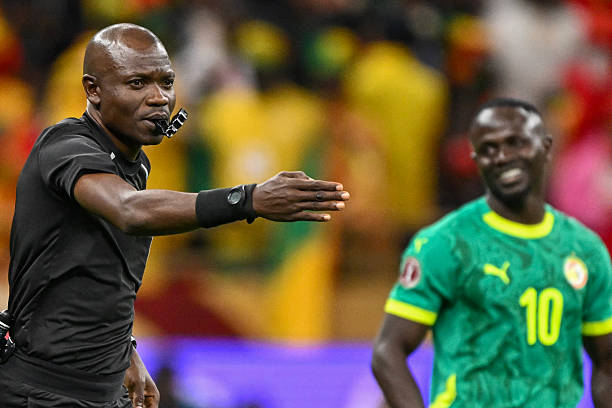
Then came the madness. In the dying embers of regular time, the football gods—who clearly enjoy a bit of chaos—decided to intervene. First, Senegal had a goal by Ismaila Sarr chalked off for a foul that only the referee, DR Congo’s Jean-Jacques Ndala, seemed to have seen. The Senegalese bench erupted. But the real drama was yet to come. Deep, deep into stoppage time, the referee went to the VAR monitor. He pointed to the spot. Penalty to Morocco. A foul on Brahim Diaz by Malick Diouf. It was the moment the conspiracy theorists had been waiting for.
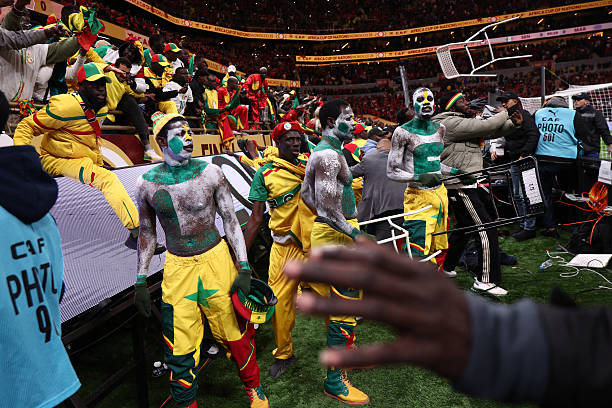
What followed was pure theater. The Senegal players, incensed, threatened to walk off the pitch. It was pandemonium. Fans in the away end were rioting, throwing chairs, their anger spilling over like boiling milk. The Senegalese squad actually gathered near the tunnel, disappearing into the shadows of the sidelines for a brief moment. To the observer, it was a protest, but in the spiritual heat of the night, it felt like something deeper. It was as if Senegal had left the pitch to summon the gods, to commune with the spirits of the ancestors and demand justice before returning to face the fire. When Sadio Mané finally corralled his teammates and pointed them back to the goal line, they looked different. “A man who calls his kinsmen to a feast does not do so to save them from starving,” Achebe once wrote. Mané called his kinsmen back to fight.
The game restarted after a twenty-minute delay. Brahim Diaz, the Real Madrid star, the golden boy of Moroccan football, stepped up. He had the weight of fifty years of Moroccan history on his boot. He ran up. He attempted a Panenka. A Panenka! In the 114th minute of a continental final! It was hubris of the highest order. Edouard Mendy didn’t bite. He stood his ground, caught the ball with almost insulting ease, and the silence that followed was louder than any cheer. The narrative had shifted. The mask had danced, and the face revealed was not one of Moroccan glory, but of Senegalese resilience.
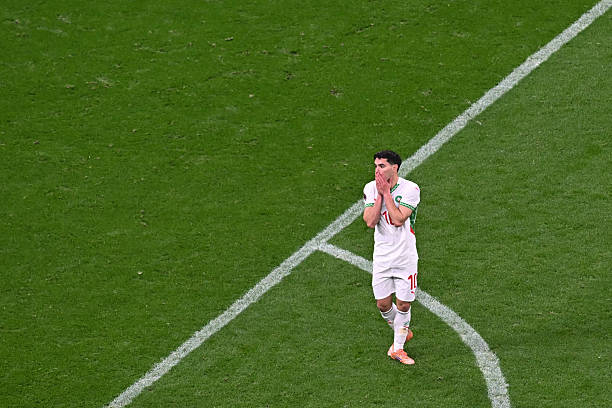
Extra time was a formality. The momentum had swung so violently that you could feel the wind of it in the stands. Pape Gueye found a pocket of space. The Moroccan defense, still reeling from the penalty miss, was a step too slow. Gueye struck. The net bulged. 1-0. The sound that came from the small corner of Senegalese fans was a primal roar, a release of frustration, anger, and unadulterated joy.
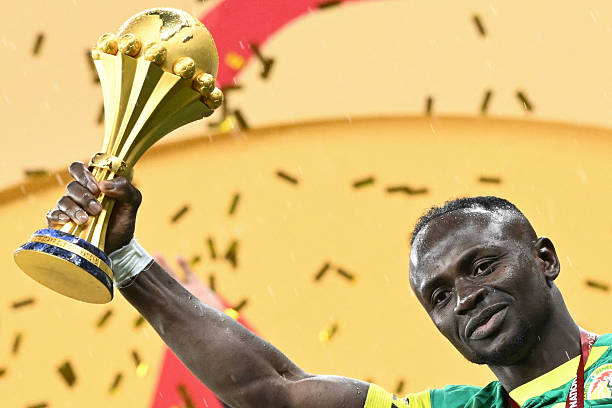
The final whistle blew, confirming Senegal as the kings of Africa once again. It was a victory not just over eleven men, but over the circumstances, the hostility, and the ghosts of the tournament. Morocco, for all their talent and their home advantage, had fallen victim to their own expectations. As the Senegalese players lifted the trophy into the Rabat sky, turning the concrete bowl of Prince Moulay Abdallah’s legacy into their own personal altar, one final truth rang out clearly. For weeks, the press had written Morocco’s coronation song, but tonight belonged to the visitors. It is exactly as Chinua Achebe warned us: “Until the lions have their own historians, the history of the hunt will always glorify the hunter.” On this night, the Lions of Teranga grabbed the pen, and they wrote the history themselves.