
The year was 1962, and the air in Santiago didn’t smell of sea salt; it smelled of copper and sweat. The FIFA World Cup had descended into the “Battle of Santiago,” a localized apocalypse in which the football pitch served primarily as a legal loophole for assault. The Chilean hosts, shielded by the divine right of the home-field advantage, treated their Italian guests like uninvited burglars rather than sporting rivals. Ken Aston, the English referee tasked with maintaining order, watched with the stoic detachment of a man observing a distant wildfire while a Chilean left hook reconstructed an Italian nose. He only rediscovered the utility of his whistle when it was time to expel the victims. It was the birth of a cynical sporting axiom: when you host the gala, the bouncers are your cousins, and the “House Rules” are written in disappearing ink.
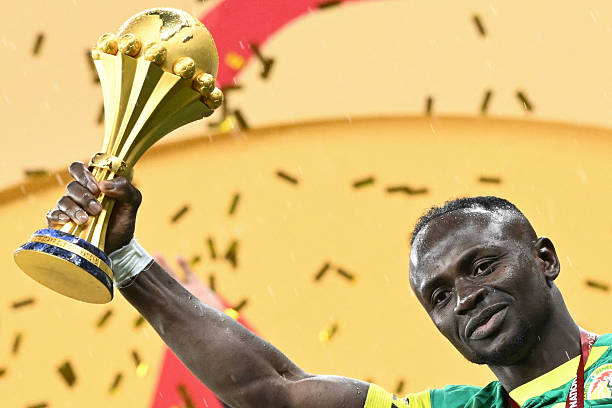
Fast forward to the 2025 Africa Cup of Nations (AFCON) Final in Rabat, and it appears the ghost of Santiago has been granted a Moroccan visa and a seat on the CAF executive board. The disciplinary ledger released following Senegal’s 1-0 triumph over Morocco reads less like a pursuit of sporting integrity and more like a ransom note penned by a disgruntled creditor. Senegal may have secured the trophy on the verdant grass of the Prince Moulay Abdellah Stadium, but CAF has ensured that the “Lions of Teranga” pay for every ounce of that silver in pure, unadulterated gold. With a staggering total of $615,000 in fines levied against the Senegalese federation and a draconian five-match suspension for coach Pape Bouna Thiaw—topped with a personal $100,000 bill—the message is clear: winning while guesting is a high-tax endeavor.
The satire of this “justice” is best observed through the lens of the “ball boy insurgency” and the infamous “Towel-gate.” While Morocco was fined $200,000 for the “inappropriate behavior” of their pitch-side youth—who spent the match attempting to confiscate Edouard Mendy’s towel in a bizarre display of psychological (and perhaps superstitious) warfare—the individual ball boys and the security officials who stood by remained shielded from public accountability. In any sane jurisdiction, two hundred grand for towel-snatching and ball-hiding would suggest the items were made of woven diamonds; here, it is a tacit admission that the host’s infrastructure was weaponized to evaporate Senegal’s momentum. Yet, compare this to the $15,000 pittance charged for the ubiquitous green lasers that performed unsolicited ocular surgery on the Senegalese players. In the skewed economy of CAF sanctions, blinding an opponent is a minor clerical error, but a ball boy’s tactical slow-walk is a premium service the host is all too happy to pay for.
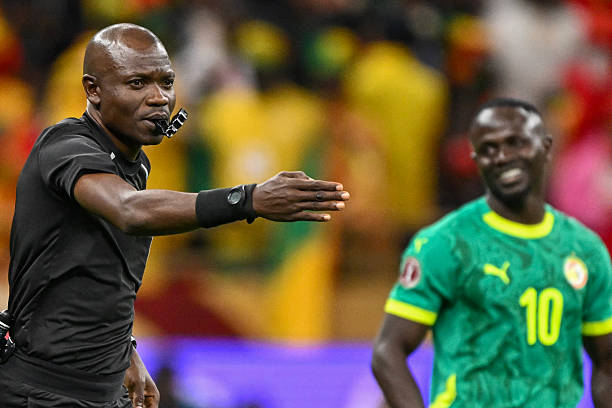
The most profound absurdity lies in CAF’s total silence regarding the hazardous conditions surrounding the final. Reports emerged of Senegal facing a lack of adequate security, and the camp was rocked by fears of food poisoning after key players like Krepin Diatta and Pape Matar Sarr collapsed under “unexplained circumstances” just before the match. In the world of CAF logic, these are merely “atmospheric details,” not worthy of the same investigative vigor as a coach’s walk-off. Pape Bouna Thiaw was handed a five-match exile for the cardinal sin of a “walk-off”—a desperate protest against officiating that had devolved into a theatrical farce. Conversely, the Moroccan technical staff, who physically breached the VAR sanctuary to “persuade” the officials, were merely asked to open their checkbooks. As the legendary Chinua Achebe once wrote in Things Fall Apart, “Looking at a king’s mouth, one would think he never sucked at his mother’s breasts.” CAF acts with the regal entitlement of an organization that has forgotten it was built to serve the game, not to tax the integrity out of its champions.
This institutional decay could have been avoided through the implementation of independent, third-party disciplinary panels—bodies entirely divorced from the political and financial gravity of the host nation. By allowing the “home team” to exert such atmospheric pressure on the officiating and the subsequent rulings, CAF risks turning the AFCON into a scripted drama where the ending is pre-determined by the hospitality budget. Until the “keys to the house” are held by a neutral concierge, the winners will continue to be billed for the windows the hosts broke, and the Lion of Teranga will find that in the jungles of African football politics, the trophy is often the heaviest thing to carry.