

Football arrived in North America for the World Cup with a tidy itinerary — a polite handover, a lesson in evolution, a neat bow to the next generation. This has been a tournament that preferred mischief to method so far, where statistics behave like stubborn children who have refused to hear with their own ears.
The technical area has become a stage for a rebellion of the white hairs. The record for the oldest manager in World Cup history, once a museum piece, became a travelling exhibit. Hugo Broos of South Africa set the mark at 74 years and 63 days; Czechia’s Miroslav Koubek bumped it to 74 years and 284 days; and then Dick Advocaat, arriving with Curaçao, planted the flag at 78 years and 260 days. These men pace the touchline like metronomes wound tight with memory — their shouts are not mere instructions but the echoes of decades of matches. Watching them is like seeing history coach the present. It proves that, indeed, what an old man sees while sitting down, a young boy cannot see…You know the drill.
Curaçao is a postage stamp of a nation — 171 square miles, a population the size of a busy Nairobi city centre — and yet it roared. Dismantled 7-1 by Germany, they still left with a jewel: Livano Comenencia’s 21st-minute strike. For a few incandescent seconds, the scoreboard stopped being a ledger of humiliation and became a loud proclamation: smallness is no excuse for silence. Curaçao scored and, in doing so, reminded the world of that ancient truth: a pepper may be small, but put it in your eye and you will know why children frown after seeing you.
Tunisia in the group stage trailed for 256 minutes across the group, a statistic that will haunt them for years to come. Worse still, they conceded inside the first ten minutes of all three group games — an opening gambit that became a daily ritual of their undoing. There is method in madness, but this was a method of misfortune: a team that was constantly caught sleeping in class, and paid for it with the heavy currency of goals. Watching them was to witness hope arrive at the door only to be told, politely and repeatedly, “Don’t call us, we’ll call you.”
Statisticians live for the deliciously pointless. Gonzalo Plata — whose surname means Silver (Ag) — scored and joined a microscopic club: only the third player in World Cup history with a name derived from a chemical element to find the net. He stands beside Fernando Hierro (Iron) and Helio Varela (Helium) in a gallery of nomenclature. I still remember that word, by the way. It is trivia that tastes like poetry: the game is geometry and grit, yes, but also a little alchemy for those who look closely shouldn’t hurt.
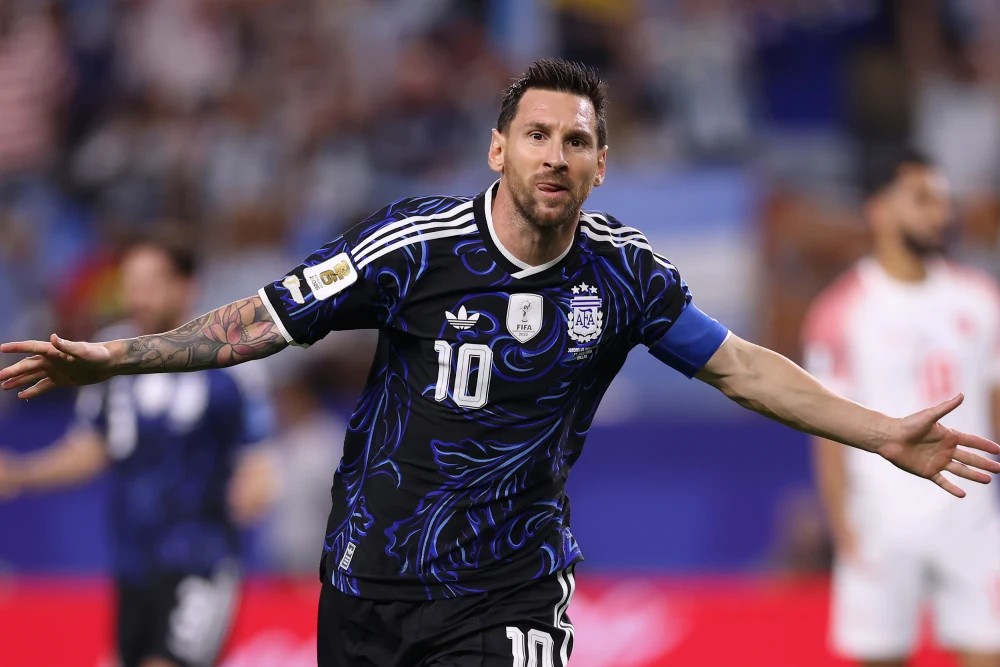
And then there is Lionel Messi. Then there’s him, who treats records like stepping stones. He has so far scored 6 World Cup goals and, with the 19th, eclipsed Miroslav Klose to become the all-time leading scorer in the competition’s history. He also became the first player to score in 7 straight World Cup games. You see, Messi is the single, stubborn law of nature — inevitable, elegant, and quietly devastating. When the owner of the ball decides to move, the rest of the chaos simply orbits him like confused flies around a bright bulb.
Ronaldo also scored a brace to become the first player to have scored in all World Cups since 2006 (6).