

On October 25, 2021, the Supreme Court of Kenya delivered a landmark ruling in the case of Dina Management Limited v. County Government of Mombasa. The apex court ruled that a title deed acquired through an irregular, unprocedural, or illegal initial allocation remains inherently flawed, regardless of how many innocent hands it passes through later. The legal maxim was made absolute: Nemo dat quod non habet—you cannot give what you do not have. If the foundation is built on quicksand, the entire structure must collapse.
Five years later, this fundamental legal philosophy hangs like a guillotine over the Football Kenya Federation (FKF) and the turbulent 2025/26 top-flight football season. As clubs battle on the pitch for points and survival, a devastating legal vacuum operates behind the scenes. The league is currently operating in a complete constitutional vacuum. Nobody—not the clubs, not the match officials, and certainly not the fans—can definitively state which set of rules is legally binding. The current season is running on a structural abyss, where nobody—neither the federation, the league managers, nor the participating clubs—can definitively point to the statutory rulebook governing the competition. In sports law, as in property law, an unratified rule is no rule at all.
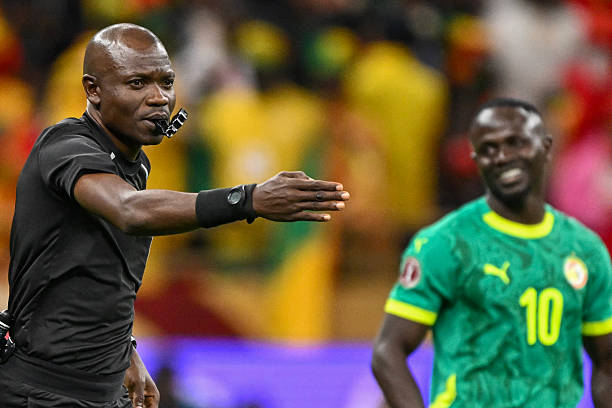
The structural failure of the 2025/26 season ceased to be an academic debate and became a stark reality during the highly publicised, disrupted fixture between Nairobi United FC and league heavyweights Gor Mahia FC. The match was halted under controversial circumstances following crowd trouble, exposing massive statutory loopholes that have left the independent disciplinary bodies paralyzed. When the match was halted, the immediate legal response should have been mechanical—a direct application of the league’s standing regulations. Instead, it opened a Pandora’s box. The technical bench, match commissioners, and club lawyers found themselves trapped in a circular argument regarding which disciplinary rules applied to determine the fate of the halted game. This fixture brought to light the terrifying reality that the rules applied to refereeing, security, points forfeiture, and match rescheduling are being drawn dynamically from an imaginary textbook. The legal impasse has rendered the outcome of the game an unresolved ghost, exposing the truth that the entire 2025/26 season lacks a legitimate framework to handle standard match disruptions.
The Operational Reality is that when a match is disrupted, modern football rules require an institutional response based on laws passed before kickoff. In Kenya, the absence of ratified rules means every disciplinary decision made today is an open invitation to litigation at the Sports Disputes Tribunal (SDT).
To understand why the current season must legally be rendered null and void, one must trace the timeline of the FKF rulebooks. The federation currently operates in a state of institutional denial. The national office has aggressively hit back at any attempts by clubs or stakeholders to reference the traditional 2019 FKF Rules and Regulations, declaring them outdated and superseded. Instead, the federation has relied on the newly drafted 2025 FKF Rules. However, there is a massive legal catch: the new executive office, which took power following highly contested elections, inherited these 2025 rules as a mere draft. The new federation office entered a house already built and simply began collecting rent, assuming the 2025 rules were active by default. Upon taking office, the new administration adopted these rules by default and began enforcing them across the 2025/26 season without presenting them to the FKF General Assembly for formal ratification. Under the FKF Constitution, the National Executive Committee (NEC) can draft rules, but they remain legally impotent until approved by the General Assembly. Enforcing unratified rules is a direct violation of corporate and sports governance.
The legal formula dictates that valid rules equal the rules multiplied by assembly ratification. Because assembly ratification equals zero, the valid rules equal zero. The current office has been enforcing laws that do not legally exist, effectively rendering every red card, every sub-regulation, every point deducted, and every fine collected since the season began completely void.
The confusion manifests heavily in the specific rules governing team composition and hosting rights. Take, for instance, the highly contested Foreign Quota Rule. Under the 2019 Rules, top-flight clubs were strictly limited to registering a maximum of five foreign players, with only three allowed on the pitch at any given time. The unratified 2025 Rules sought to liberalize this, pushing the quota higher to accommodate clubs playing in CAF continental championships. Because the rules were never ratified, teams fielding squads based on the 2025 threshold are technically fielding ineligible players under the 2019 rules, leaving matches subject to boardroom forfeiture.
Similarly, the fixture between Mara Sugar FC and Gor Mahia FC exposed the deep flaws in home venue rules. Under standard football regulations, a club has an absolute right to host. If a home venue is deemed unplayable or high-risk, the rules must explicitly state the alternative mechanisms—such as neutral closed-door stadiums or geographical radius shifting—without compromising the commercial and sporting rights of the host team. Instead, arbitrary venue shifts by the federation have disrupted the sporting merit of the competition, creating a landscape where rules are made up on a week-to-week basis.
In defense of the league’s chaotic management, the federation has frequently thrown around the doctrine of Force Majeure. Originating from French civil law and deeply embedded in FIFA statutes, Force Majeure applies to unforeseen, uncontrollable events—such as natural disasters, civil unrest, or sudden structural failures—that make the completion of a match impossible.
In the context of the Nairobi United v. Gor Mahia game, the match was ripe for field completion. Standard regulations dictate that if a match is halted due to a non-permanent force majeure event, such as temporary crowd trouble, poor lighting, or pitch waterlogging, the match must be completed the next morning or at a rescheduled later date, resuming from the exact minute and under the same on-pitch conditions regarding players, cards, and scores as when it was stopped.
However, because the disciplinary structures lacked a legally binding rulebook to enforce the next-day completion protocol—and since the match was not completed the next day or anytime thereafter—the game fell into an administrative black hole. The federation could not enforce resumption because the clubs successfully argued that the unratified 2025 rules could not bind them, while the 2019 rules had been explicitly disowned by the federation itself.
The internal collapse reached its boiling point. On May 28, 2026, the SportPesa League Chairmen’s Council issued an explosive, urgent Press Statement from their monthly meeting at the Serena Hotel in Nairobi. The meeting, which was attended by Football Kenya Federation President Hussein Mohammed hours following his survival from a botched ousting, resulted in an unprecedented resolution that effectively confirms the structural illegitimacy of the current league operation.
The official statement to the media declared that members unanimously resolved to immediately establish a Transition League Management Committee with clear Terms of Reference and timelines to oversee the formation of a fully autonomous league body. This body would operate within the FKF Constitution and its attendant statutes to ensure an inclusive and legally sound transition process.
The Chairmen’s Council openly acknowledged that a structurally autonomous League Management Body is essential for the sustainable professionalisation of the league. By immediately moving to establish a Transition League Management Committee, the club bosses and the FKF President have publicly conceded that the existing governance structure for the 2025/26 season is broken beyond repair.
With the season approaching its final stretch, some corporate voices suggest letting the season conclude naturally to avoid hurting commercial sponsors like SportPesa and Azam Media. In law, this is called arguing for mootness—the idea that the matter should be ignored because the season is already nearly done. However, mootness is a dangerous option. Allowing an illegal season to stand creates a toxic precedent. If a champion is crowned and teams are relegated based on unratified rules, any aggrieved club can permanently freeze Kenyan football by filing lawsuits at the Court of Arbitration for Sport or the SDT. The entire financial ecosystem would collapse under the weight of damage claims.
The only amicable, legally sound resolution is an absolute regulatory reset. First, void the 2025/26 season by declaring it null and void with zero sporting consequences, meaning no official champions and no forced relegations, treating it instead as a transitional exhibition year. Second, empower the newly formed Transition League Management Committee to draft a fully authorized independent legal framework for the upcoming 2026/27 season. Third, FKF President Hussein Mohammed must immediately call a Special General Meeting to formally ratify the 2026/27 Rules and Regulations before a single ball is kicked next season. To conclude otherwise would be to ignore the wisdom of the Supreme Court of Kenya.
This report is compiled in compliance with the FKF Constitutional Statutes, the SportPesa League Chairmen’s Council Resolutions of May 28, 2026, and established principles of international sports law.